
Texaco Gas Stations for Sale in Florida
Texaco has been on Florida corners for the better part of a century, and that history is both the asset and the diligence item. A brand that has been on a site since the 1960s means an established customer habit — and decades of fuel handling under regulatory regimes that have changed several times.
The brand is owned by Chevron, which acquired Texaco in 2001 and continues to market both in the US. Supply and image programs come from the same company, so a Texaco buyer is dealing with the same counterparty a Chevron buyer is, on a brand positioned a step below Chevron's premium framing.
Texaco is a trademark of its owner. STAX Real Estate is an independent brokerage and is not affiliated with, endorsed by, or acting as an agent of Texaco.
Texaco Listings on the Market Now
 Owner-User Fee Simple
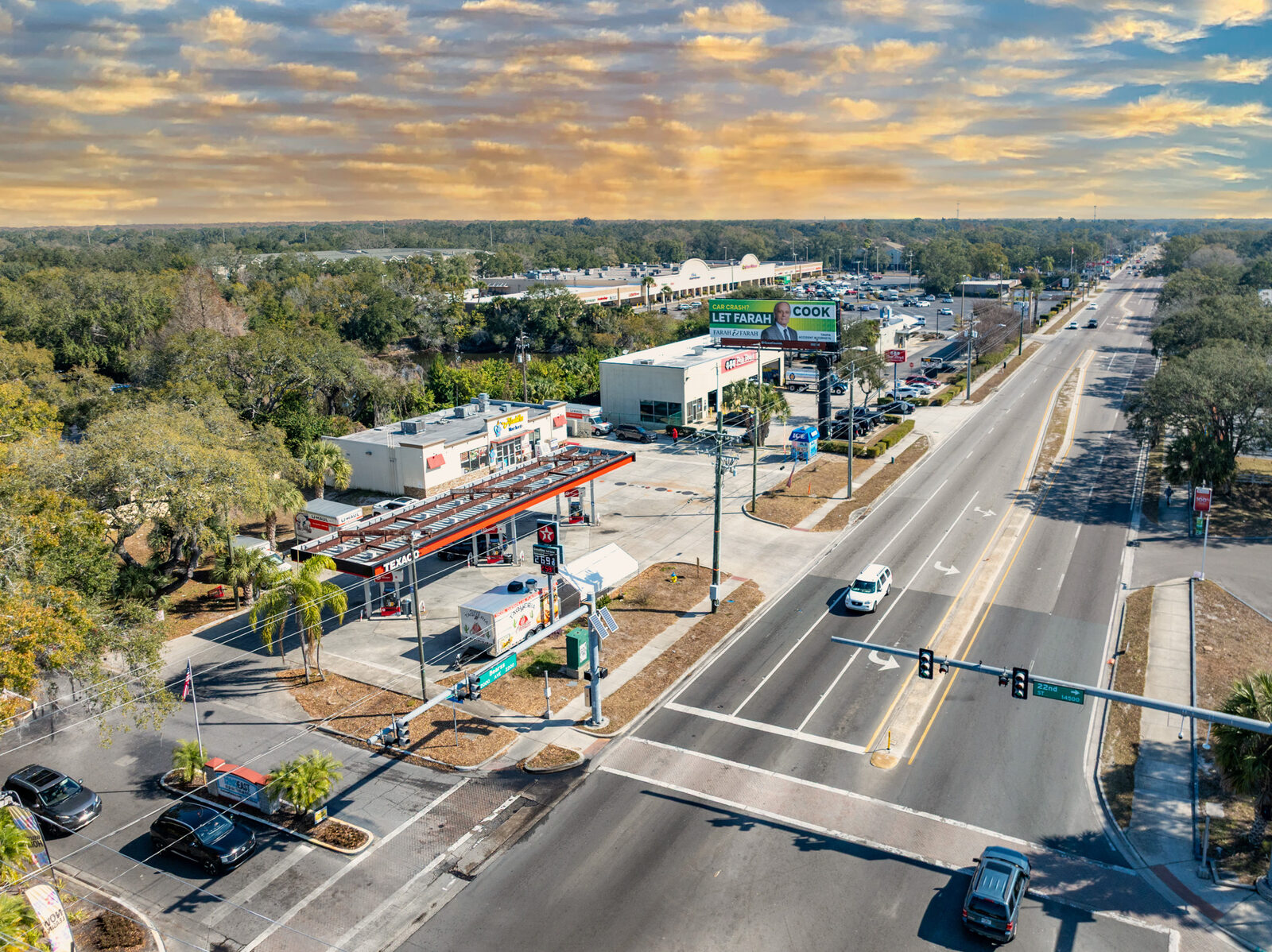
 Texaco — 2202 E Bearss Ave, Tampa, FL
Newly renovated Texaco with commercial kitchen (13-ft hood), beer cave, and upgraded equipment — positioned on a 44,600 AADT commuter artery connecting North Tampa to I-275. Pad site to a grocery-anchored center near USF (50,000+ students), Walmart Supercenter, and Target.…
Tampa, FL · 2,720 SF · 0.77 AC · Texaco
What Matters When You Buy a Texaco
A long-tenured corner has a long environmental file
Florida's cleanup program record on a site is public, and on a corridor that has been retailing fuel for fifty years there is usually something in it. That is not automatically a problem — many sites are enrolled, remediated, or closed out — but it is the single most common reason a Florida fuel deal reprices late. Pull the file before you price the site, not during diligence.
Brand step-down is a lever, not a demotion
Because Chevron owns both marks, moving a site between them is a supplier conversation rather than a defection. Operators use the step in both directions: taking a secondary corridor to the lower-cost brand position, or upgrading a strong corner to capture more of the price premium. Either way the economics turn on image cost and remaining supply term, which is where the negotiation actually happens.
Recognition without a premium expectation
Texaco carries genuine name recognition with an older Florida customer base while sitting under Chevron's price framing rather than at it. For a site whose trade area is price-sensitive but brand-conscious — a common Florida profile on an aging arterial — that combination can produce better gallons than either an unbranded conversion or a premium re-brand would.
How a branded fuel site actually works
Three assets, one price
Real estate, an operating business, and a fuel supply agreement. The first two get underwritten by almost every buyer; the third decides your cost of goods and your required capital, and it is the one most often read last.
The brand is licensed, not leased
The refiner does not operate the store or pay you rent. An independent operator or a branded wholesaler holds the rights and supplies the site, so ask who the supplier is and what term is left before you form a view on value.
PMPA sits underneath
The federal Petroleum Marketing Practices Act governs how a supplier may terminate or decline to renew a franchised dealer relationship. Useful protection, and not a substitute for reading the agreement you are inheriting.
Where Florida fuel sites trade
Florida is not one market. The same Texaco site economics produce very different values in a bridge-constrained Pinellas corridor and an entitlement-constrained Miami-Dade one. Each market page covers what actually drives volume there.
Texaco FAQ
Is Texaco still an active brand in Florida?
Yes. Chevron has continued to market Texaco in the US since acquiring the company in 2001, and Texaco-branded sites remain common across Florida arterials. The practical implication for a buyer is that the brand is supported — supply, image programs and consent process all run through the same organization that handles Chevron — rather than being a legacy mark left on a canopy nobody maintains.
What should I check first on an older Texaco site?
The tanks and the file, in that order. Age, material and monitoring status of the underground storage tanks drive both your insurability and your capital plan, and Florida's public cleanup record tells you what the site's history looks like to a regulator. After that, the supply agreement: remaining term, minimum volume, image obligations, and whether the brand consents to assignment.
Would I be better off unbranding a Texaco station?
Sometimes, and it is worth modeling honestly rather than assuming. Unbranding frees you from image capital and branded supply pricing; it also gives up recognition on a customer base that has driven past that sign for decades. On a corridor where the neighboring competition is also unbranded, the switch tends to work. Where a major sits across the street, it usually does not.
Buying or selling a Texaco site?
250+ properties sold and leased, $525M+ in volume, by a broker who ran a dozen locations as CEO before ever writing a listing agreement. Tell us what you're trying to accomplish.