Gas Stations for Sale in Miami-Dade County
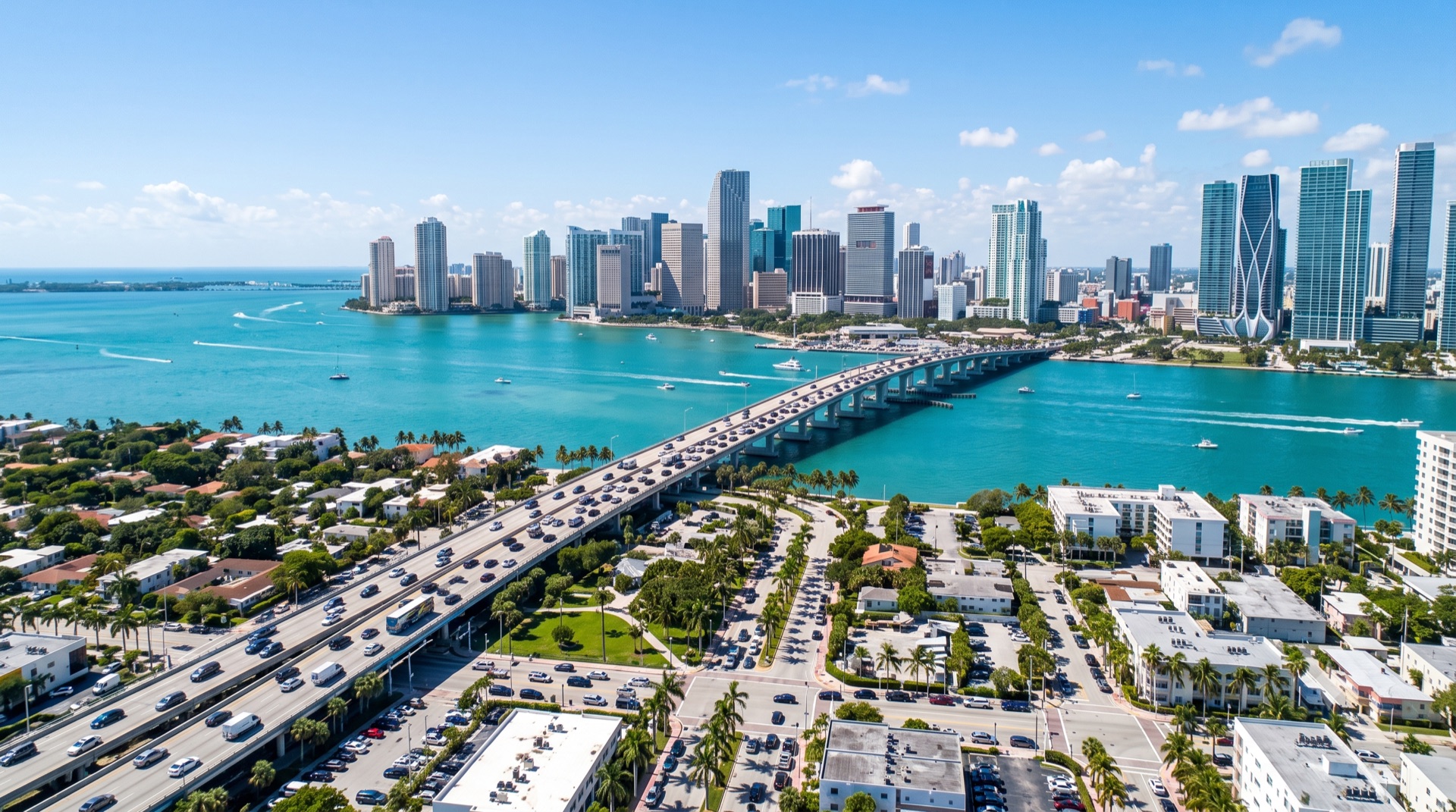
Miami-Dade is the densest fuel retail market in Florida and one of the hardest in the country to add supply to. Nearly three million residents, a corridor grid that was built out decades ago, and municipalities that have shown little appetite for permitting new fuel uses over a shallow aquifer.
The consequence is straightforward: a station here is priced on a corner that cannot be reproduced, and the operating business is frequently the second consideration rather than the first.
Opportunities in Miami-Dade
1 Miami-Dade opportunity available confidentially
These owners are not running a public process, so the address and financials release once you are approved. Sign once and we can share the full file.
Request AccessWhy Fuel Retail Works in Miami-Dade
Volume per site, not sites per market
Trade areas overlap so heavily that a catchment is measured in blocks. That makes access geometry decisive — which side of the median you sit on, whether the turn in is signalised, how easy the exit is. Two sites on the same road with similar counts routinely pump very different gallons for reasons that never show up in a traffic study.
A c-store customer worth understanding
Miami-Dade's inside sales mix rewards operators who know their specific customer. Product assortment, prepared food, money services and bilingual staffing all move the basket in ways a spreadsheet built for a suburban Midwest store will get wrong. It is a market where an experienced operator genuinely outperforms a passive one.
Demand that is not commuter-dependent
PortMiami, MIA, a very large rental fleet, and a substantial contractor and trades base put vehicles on the road all day rather than only at rush hour. Layer year-round visitors on top and the weekly volume curve is flatter than in a metro that empties out at six.
Environmental history to read carefully
Many Miami-Dade corridors have been retailing fuel for fifty years, and the water table is shallow. Florida's cleanup program file is public — pull it before pricing anything. This is the county where an unread environmental record most often reprices a deal late.
Submarkets We Cover in Miami-Dade County
Buying in Miami-Dade
We represent operators expanding their footprint and investors buying fuel as a tax-advantaged net lease asset. Both get the same underwriting: what the site actually produces, what it will produce under a better operator, and what the environmental and brand-contract position really looks like before you're committed.
How we work with buyers →Selling in Miami-Dade
If you own a station here, the first question isn't who to list with — it's what it's worth and whether selling is even the right move. Start with a valuation. If leasing turns out to be the better outcome, we'll tell you that instead.
How we take a station to market →Gas Stations for Lease in Miami-Dade
Not every deal here is a sale. We represent landlords leasing fuel and convenience sites to qualified operators, and operators looking for a site to run — across Miami, Hialeah, Key Biscayne, Miami Gardens, Doral and the rest of Miami-Dade County.
For an owner, leasing keeps the real estate, the appreciation and the depreciation in your name while somebody else takes the day-to-day. For an operator, it is the lowest-capital way into a corner you could not afford to buy. Rent has to be underwritten against what the site actually produces rather than against whatever the comparable down the road is asking — a rent the tenant cannot carry is not a higher rent, it is a future vacancy.
How our leasing worksMiami-Dade Gas Station FAQ
How much does a gas station cost in Miami-Dade?
More than the same store economics would fetch almost anywhere else in Florida, because the buyer is pricing a scarce entitled corner rather than just the earnings. An owner-operated site sold with the real estate generally runs at the upper end of the 7x to 9x range; leased sites price on a cap rate. What moves the number most is the corner itself — counts, access and whether a competitor could realistically open nearby.
Why is it so hard to build a new gas station in Miami-Dade?
Land cost, municipal reluctance to approve new fuel uses, and the difficulty of permitting new underground storage tanks over a shallow aquifer. The three compound. The practical result is that existing fuel pads carry scarcity value independent of how well the store is currently run, which is why underperforming Miami-Dade sites still attract competitive bidding.
Do you have off-market gas stations in Miami-Dade?
Usually. Owners here are particularly reluctant to run a public process — signalling an exit to staff, fuel suppliers and nearby competitors carries real cost in a market this tight. A meaningful share of what we transact in Miami-Dade never reaches a public marketplace and is released under NDA.
Buying or selling in Miami-Dade?
250+ properties sold and leased, $525M+ in volume, by a broker who ran a dozen locations as CEO before ever writing a listing agreement. Tell us what you're trying to accomplish.